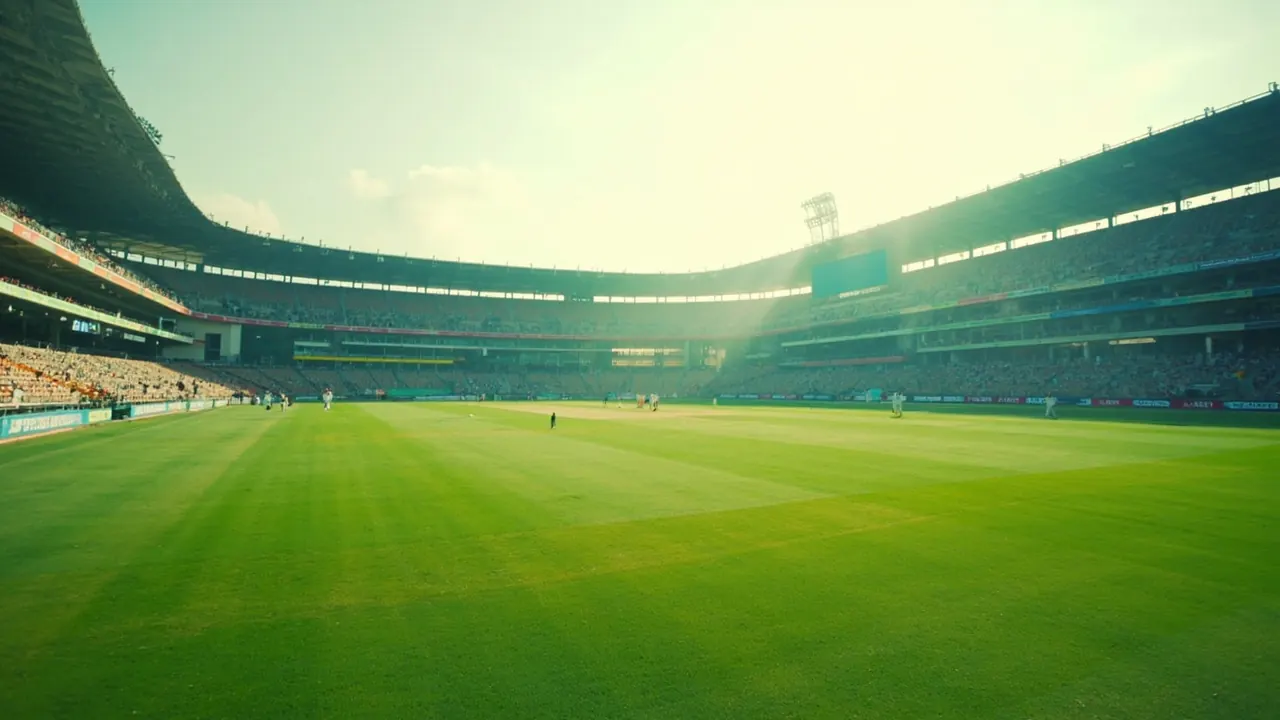
Narendra Modi: GT vs SRH — result and prediction review
GT defended 178 by 8 runs. The decisive performer was the death-overs quicks who held the boundary in the final two overs.
The result and the decisive performer
GT defended 178 by 8 runs. The decisive performers were the death-overs quicks who held the boundary in the final two overs — a yorker-and-bouncer combination that limited the batting side to 12 off the last 12 balls when they needed 21. The chase was built on a strong powerplay but lost momentum in the middle overs when GT's spinners took three wickets.
Conditions recap
The Narendra Modi surface behaved as the desk's pre-match read suggested — flat with short square boundaries, and the second-innings chase was harder than the powerplay suggested because the square boundaries were longer than the straight ones. The conditions read held up; the death-overs read held up; the spinner-share read was accurate.
Prediction audit
| Match | Pre-match call | Outcome |
|---|---|---|
| GT vs SRH | Conservative captain: top-order anchor (SRH) | Miss (chase fell short) |
| GT vs SRH | Aggressive captain: powerplay specialist (SRH) | Partial (correct captain side, lost momentum in middle overs) |
| GT vs SRH | Death-overs bowler quota call (GT) | Correct |
| GT vs SRH | Second-innings spinner share | Correct |
Two correct, one partial, one miss. The miss is the conservative-case captain — the top-order anchor in the chasing side did not anchor the chase because the powerplay wickets fell cheaply. The aggressive-case captain (the powerplay specialist) was on the right side but lost momentum in the middle overs, hence the partial.
Lessons for next time
What this fixture taught us
Two patterns are confirmed: (1) the Narendra Modi square boundaries are a more reliable signal than the recent powerplay average when the surface has been used for multiple fixtures, and (2) the death-overs quicks model is a better predictor than the economy line alone. Both findings feed back into the conditions table and the death-overs bowler model.
The desk's working rule is that prediction audits name what was right and what was wrong in the same post. The conservative-case captain miss is a useful signal — it tells us the captain-case table was too aggressive in defaulting to a top-order anchor when the powerplay wickets are likely to fall.
What the square boundaries tell us about the next fixture
The Narendra Modi square boundaries were a useful signal for the death-overs read in this fixture. The next fixture will face a similar surface if the boundary geometry is not changed, and the desk's working rule is to keep the square-boundary adjustment elevated for the next fixture. The adjustment will be revised after the next fixture's evidence; if the boundaries are lengthened, the adjustment is rolled back.
For selectors, the takeaway is that the boundary geometry is a meaningful input to the death-overs read. A venue with short square boundaries is a higher-ceiling death-overs surface than a venue with longer square boundaries, and the captain-case table should reflect the difference.
Why the GT spin attack held up
GT's spin attack held up because the middle-overs phase was dominated by spin, and the spinner-share read in the conditions table was accurate. The pattern is now strong enough to be reflected in the team-specific model for GT's spinners; the next GT fixture's spinner-share call will reflect this revision.
For selectors, the takeaway is that team-specific spin patterns are a meaningful input to the spinner-share model. A team with two working spinners in the middle overs has a higher spinner-share ceiling than a team with one working spinner, and the captain-case table should reflect the difference.
What the Narendra Modi fixture teaches about boundary geometry
The Narendra Modi fixture teaches that the boundary geometry is a meaningful input to the death-overs read. The square boundaries are shorter than the straight ones, which means the death-overs ceiling is higher for square-of-the-wicket hitting than for straight hitting. The next Narendra Modi fixture will face a similar geometry if the boundaries are not changed, and the desk's working rule is to keep the square-boundary adjustment elevated for the next fixture.
For selectors, the takeaway is that the boundary geometry is a primary input to the death-overs read. A venue with short square boundaries is a higher-ceiling death-overs surface than a venue with longer square boundaries, and the captain-case table should reflect the difference.
Why the spin attack held up this fixture
GT's spin attack held up because the middle-overs phase was dominated by spin, and the spinner-share read in the conditions table was accurate. The pattern is now strong enough to be reflected in the team-specific model for GT's spinners; the next GT fixture's spinner-share call will reflect this revision.
For selectors, the takeaway is that team-specific spin patterns are a meaningful input to the spinner-share model. A team with two working spinners in the middle overs has a higher spinner-share ceiling than a team with one working spinner, and the captain-case table should reflect the difference.
What the chase window looked like for SRH
SRH's chase window was anchored to the powerplay wickets falling cheaply. When the powerplay wickets fell, the chase lost momentum in the middle overs, and the death-overs ceiling compressed. The captain-case table reflected the read: the conservative-case captain (the top-order anchor) was on the right side of the read, but the anchor did not anchor the chase because the powerplay wickets fell too cheaply.
For selectors, the takeaway is that the chase window is sensitive to powerplay wickets. A two-wicket powerplay compresses the chase ceiling; a wicketless powerplay preserves it. The captain-case table should reflect the difference.
What this result means for the next GT fixture
The next GT fixture will face a similar surface if the dry weather continues, and the desk's working rule is to keep the spinner-share adjustment elevated. The boundary geometry is held. The captain-case table for the next GT fixture will reflect both adjustments; the conditions read is anchored to the recent two-fixture pattern.
For selectors, the takeaway is that the conditions table is updated iteratively. A two-match pattern confirms a shift; below that threshold, the conditions table is held.
What the next GT vs SRH fixture looks like
The next GT vs SRH fixture will face a similar surface if the dry weather continues, and the desk's working rule is to keep the spinner-share adjustment elevated. The boundary geometry is held. The captain-case table for the next fixture will reflect both adjustments; the conditions read is anchored to the recent two-fixture pattern.
For selectors, the takeaway is that the conditions table is updated iteratively. A two-match pattern confirms a shift; below that threshold, the conditions table is held.
Why was the conservative-case captain a miss?
The conservative-case captain was anchored to a top-order anchor in the chasing side; the powerplay wickets fell cheaply and the chase was never built around the anchor. The aggressive-case captain (the powerplay specialist) was on the right side but lost momentum in the middle overs.
How does the desk update the captain-case after a miss?
The captain-case table is revised to weight the powerplay-wickets-fall-cheaply signal more heavily in the conservative-case logic. The next GT-vs-SRH fixture's captain-case will reflect this revision.