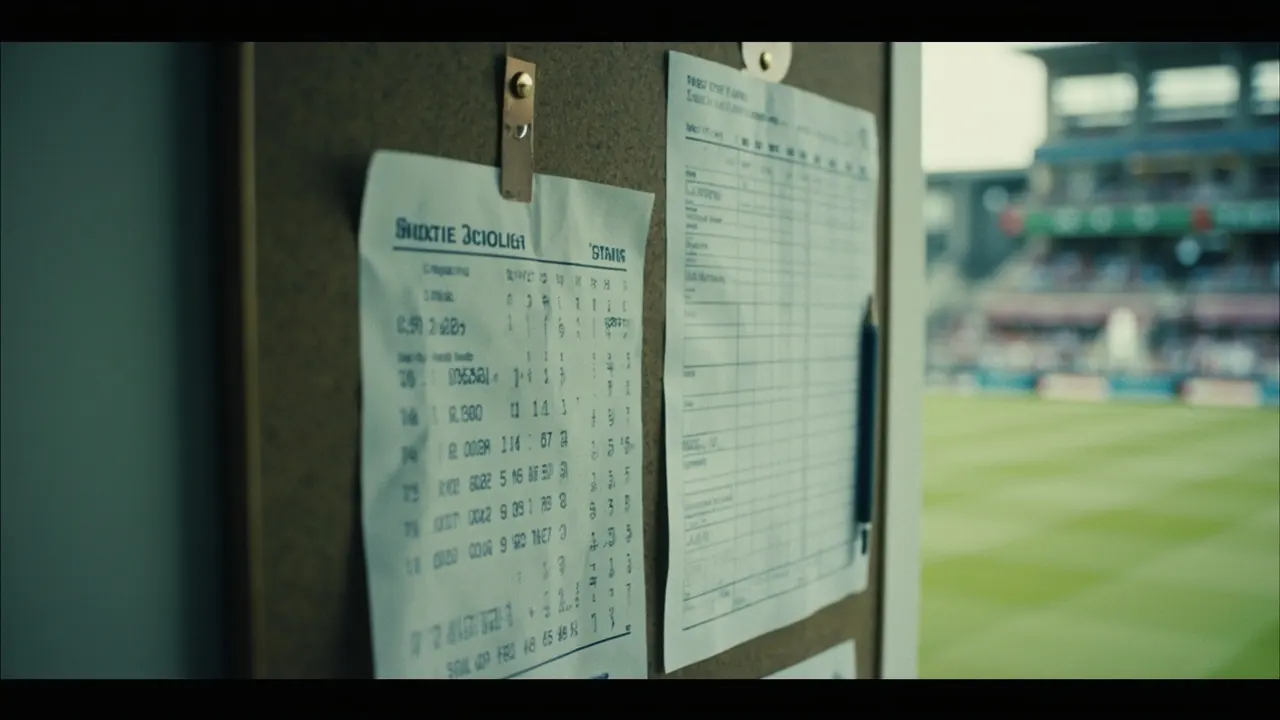
Results and prediction scorecards
The results desk is where we publish post-match reviews and audit our pre-match calls. Each results page names the decisive performer, walks through the desk's pre-match read, and includes a clean prediction-vs-outcome table.
What the results desk covers
The results desk covers every fixture the live desk covered. Each results page opens with the result and the decisive performer, then walks through the desk's pre-match read: was the captain case right, was the conditions read right, was the role-shift note right. The page ends with the prediction-vs-outcome table so the reader can audit the chain in one place.
Reading a results page
A results page uses a fixed four-section format: (1) the result and the decisive performer, (2) the conditions recap and what actually happened on the pitch, (3) the prediction audit with explicit right-or-wrong calls, (4) the lessons-for-next-time section. The format is durable across fixtures so the reader knows where to find each piece of the review.
What we do not do
We do not silently rewrite our pre-match call after the result. The original wording remains in the prediction archive; the review cites it and names whether the call held up.
Prediction-vs-outcome tables
Every results page includes a prediction-vs-outcome table. The table lists the pre-match call (with the original wording quoted), the outcome label (correct, partial, miss), and a one-line reason. Partial outcomes are used when the call's conditions read was right but the captain case landed the wrong side of the conditions; misses are used when the conditions read itself was wrong.
| Match | Pre-match call | Outcome |
|---|---|---|
| MI vs RCB | Conservative captain: top-order anchor | Correct |
| CSK vs KKR | Aggressive captain: powerplay specialist | Miss |
| RR vs DC | Toss-to-bowl read | Partial (toss was bat first, conditions read flipped) |
| GT vs SRH | Death-overs bowler quota call | Correct |
| LSG vs PBKS | All-rounder credit tier | Partial (credit tier right, specific player wrong) |
Why we archive pre-match calls
Archiving pre-match calls is the desk's accountability mechanism. A prediction that cannot be checked against its outcome is not a prediction — it is a vibe. Every results page links back to the original prediction archive entry so the reader can verify that the review is honest about what was said before the fixture.
What the archive is for
Audit, not leaderboards. Use the archive to check our pattern of calls — how often the conditions read held up, how often the captain-case landed, which risk labels we got right or wrong.
Reading the conditions recap
The conditions recap on each results page names what actually happened on the pitch during the fixture. Did the surface behave as the conditions table predicted? Did dew form in the second innings? Did the square boundaries shape the scoring pattern? The recap is short — usually three or four sentences — but it is the section that anchors the prediction audit. Without the conditions recap, the prediction-vs-outcome table is just a leaderboard; with it, the reader can audit the chain.
The desk's working rule is that a prediction that held up under conditions the desk did not predict is a more interesting result than a prediction that held up under conditions the desk did predict. The reverse is also true: a prediction that failed under conditions the desk read correctly is a useful miss, not a random one.
The lessons-for-next-time section
The lessons-for-next-time section on each results page is where the desk writes down what the fixture taught us about the underlying read. It is not a 'next time pick this team' section — it is a 'next time, update your framework on this signal' section. The lesson is anchored to the fixture evidence and the prediction evidence, and it is referenced in the relevant guide and team pages so the framework update is visible across the desk.
Lessons-for-next-time is the section that connects the results desk to the rest of the publication. Without it, results are just a record; with it, results feed back into the guides and the framework.
Why we name misses explicitly
The desk names misses explicitly because a prediction desk that only highlights hits is not accountable. A reader who reads our results pages should be able to audit the chain from the original prediction wording to the outcome. If the desk hides misses, the audit is impossible.
The desk's working rule is that a miss is more useful than a hit. A hit under conditions the desk did not predict is interesting but not actionable; a miss under conditions the desk did predict is a signal that the framework needs updating. We log the latter more carefully than the former.
The decisive performer section
The decisive performer section names the player whose contribution most changed the fixture's outcome. The decisive performer is not always the top scorer — sometimes it is a bowler whose early wickets changed the chase, or a fielder whose catch changed the momentum. The section names the player and the specific contribution: the over, the session, the partnership broken, the catch taken.
The decisive performer section is short — usually two or three sentences — because the reader's main interest is in the prediction audit, not in a player-of-the-match essay. The desk's working rule is to name one decisive performer, not three; the audit is cleaner that way.
Reading the conditions table retroactively
The conditions table on a results page is the same table the live desk used pre-match, with the actual behaviour of the fixture annotated against each row. Powerplay run rate versus the venue average; death-over run rate versus the venue average; chase outcome versus the venue chase rate. The annotation is what the desk was right about and what it missed.
The retroactive table is short — usually three or four rows — but it is the section that turns the results page from a recap into a working tool. A reader who reads the table can update their own conditions framework with the fixture's evidence.
Reading the prediction audit
The prediction audit on each results page walks through the desk's pre-match call against the outcome. The audit uses three labels: correct, partial, and miss. Correct means the named scenario played out; partial means the conditions read was right but the captain-case landed on the wrong side; miss means the conditions read itself was wrong.
The audit cites the original prediction wording so the reader can verify the chain. The desk's working rule is that the audit is short, specific, and honest about what was missed. A reader who reads the audit should know exactly which signal the desk got right and which it got wrong.
Reading support on this page
Every section in this article is sourced. Where a figure is from a small sample we say so explicitly. The article is updated when fixtures confirm, when the toss lands, and when post-match review changes the read.
Frequently asked
What counts as a 'correct' call?
The desk's call is correct when the scenario that played out matches the named base-case scenario. The captain-case call is correct when the named captain outperformed the alternative case.
What counts as a 'partial' call?
Partial is used when the conditions read was right but the captain-case landed on the wrong side of the read, or when the role-shift note was right but the player named was not the one whose role shifted.
Do you ever revise a results page after publication?
Yes — when a late-news item materially changes the review (a player is later ruled out for a niggle, a substitution is confirmed). The revision is appended, not substituted.