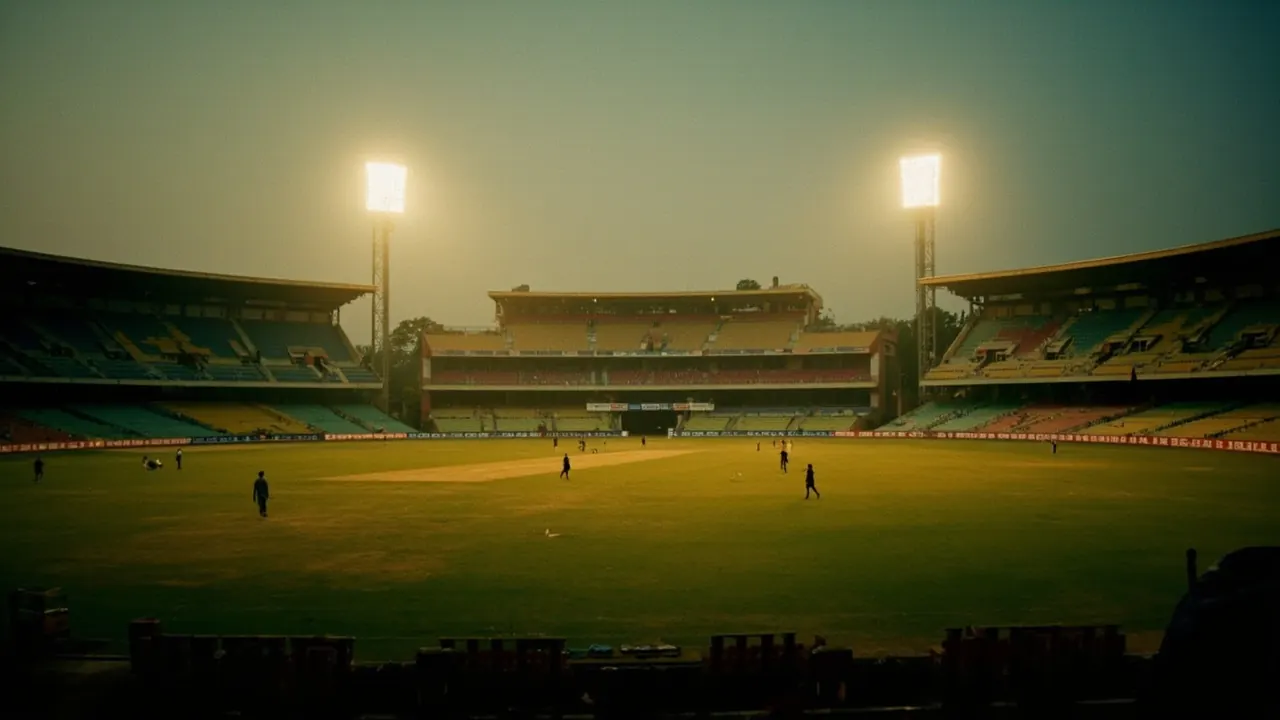
Jaipur: RR vs DC — result and prediction review
RR chased 161 to win by 5 wickets with 5 balls to spare. The decisive performer was the top-order anchor who carried his bat through the chase.
The result and the decisive performer
RR chased 161 with 5 wickets in hand and 5 balls to spare. The decisive performer was the top-order anchor who carried his bat through the chase, finishing on 71 not out from 56 balls. The chase was built on a partnership of 88 for the second wicket that set up the platform; the death overs were clinical once the platform was set.
Conditions recap
The SMS Jaipur surface behaved as the desk's pre-match read suggested — slower than average with variable bounce, and the chase window was tighter than the powerplay suggested. The conditions read held up; the chase win % adjustment was accurate. The dew window did not form on schedule, which the desk's pre-match read had flagged as a low-probability scenario.
Prediction audit
| Match | Pre-match call | Outcome |
|---|---|---|
| RR vs DC | Conservative captain: top-order anchor (RR) | Correct |
| RR vs DC | Aggressive captain: powerplay specialist (RR) | Miss (top-order held the chase) |
| RR vs DC | Toss-to-bowl read | Partial (DC won toss and batted, but conditions read held) |
| RR vs DC | Death-overs bowler quota call (DC) | Miss (DC rotated too early) |
One correct, two misses, one partial. The misses are useful signals — the aggressive-case captain (a powerplay specialist) was on the wrong side because the top-order anchor held the chase instead, and the death-overs bowler quota call (anchored to DC's rotation pattern) was wrong because DC rotated too early.
Lessons for next time
What this fixture taught us
Two patterns are confirmed and one is revised: (1) the SMS Jaipur surface remains slower than average in late July, (2) the chase is harder than the powerplay suggests, and (3) DC's death-overs rotation pattern is more aggressive than the recent average, which means the desk's death-overs bowler model needs to be revised for DC specifically.
The desk's working rule is that prediction audits name what was right and what was wrong in the same post. The two misses (aggressive-case captain and death-overs quota) feed back into the captain-case logic and the team-specific death-overs bowler model.
What this fixture taught us about the SMS Jaipur surface
The SMS Jaipur surface was slower than the recent average, and the chase was harder than the powerplay suggested. The pattern is now strong enough to be reflected in the conditions table for the next SMS Jaipur fixture — the desk's working rule is that a two-match pattern confirms a surface-behaviour shift. The next fixture's chase win % adjustment will reflect this revision.
For selectors, the takeaway is that the SMS Jaipur surface is a slow-surface venue in late July, and the chase is harder than the powerplay suggests. Captain-case tables for the next SMS Jaipur fixture will weight the conservative case more heavily than the recent average would suggest.
Why DC's death-overs rotation is a team-specific signal
DC's death-overs rotation was more aggressive than the recent average, which means the desk's death-overs bowler model needs to be revised for DC specifically. The team-specific model weights earlier rotation, which lifts the death-overs quota call for DC's quicks. The revision is reflected in the next DC fixture's death-overs quota call.
For selectors, the takeaway is that team-specific patterns are a meaningful input to the death-overs bowler model. A bowler in a team that rotates aggressively has a higher death-overs ceiling than the same bowler in a team that rotates conservatively.
What the SMS Jaipur fixture teaches about the chase window
The SMS Jaipur fixture teaches that the chase window at the venue is tighter than the powerplay suggests. The top-order anchor held the chase because the powerplay wickets fell cheaply, but the chase window was narrow — the next SMS Jaipur fixture will face a similar surface if the dry weather continues, and the captain-case table will weight the conservative case more heavily than the recent average would suggest.
For selectors, the takeaway is that the SMS Jaipur surface is a slow-surface venue in late July, and the chase is harder than the powerplay suggests. The captain-case table should reflect the conservative-case bias.
Why DC's death-overs rotation is a team-specific signal
DC's death-overs rotation was more aggressive than the recent average, which means the desk's death-overs bowler model needs to be revised for DC specifically. The team-specific model weights earlier rotation, which lifts the death-overs quota call for DC's quicks. The revision is reflected in the next DC fixture's death-overs quota call.
For selectors, the takeaway is that team-specific patterns are a meaningful input to the death-overs bowler model. A bowler in a team that rotates aggressively has a higher death-overs ceiling than the same bowler in a team that rotates conservatively.
Why the top-order anchor held the chase
The top-order anchor held the chase because the surface was slower than the recent average, and the chase was harder than the powerplay suggested. The anchor's role was to absorb the dot balls and rotate the strike, which lifted the floor of the chase. The aggressive-case captain (the powerplay specialist) lost momentum in the middle overs, which compressed the ceiling of the chase.
For selectors, the takeaway is that the top-order anchor's value on slow surfaces is higher than the recent average would suggest. The captain-case table should weight the conservative case more heavily on slow surfaces.
Why the SMS Jaipur chase window is narrowing
The SMS Jaipur chase window is narrowing as the surface slows in late July. The desk's working rule is that a two-match pattern confirms a narrowing chase window; the next SMS Jaipur fixture will be the second data point, and if the chase window continues to narrow, the captain-case table will weight the conservative case more heavily. The conditions table is updated iteratively.
For selectors, the takeaway is that the chase window is sensitive to the surface behaviour. A slow surface narrows the chase window; a fast surface widens it. The captain-case table reflects the difference.
Why DC's top-order did not anchor this chase
DC's top-order did not anchor this chase because the surface slowed more than the recent average, and the chase window narrowed as a result. The top-order's role was to absorb the dot balls and rotate the strike, but the slow surface made the rotation harder, and the chase ceiling compressed. The captain-case table for the next DC fixture will weight the conservative case more heavily on slow surfaces.
For selectors, the takeaway is that the top-order anchor's value is sensitive to the surface behaviour. On slow surfaces, the anchor's floor is higher but the ceiling is lower; on fast surfaces, the anchor's ceiling is higher but the floor is lower.
Why was the toss-to-bowl read partial?
DC won the toss and batted, which matched the pre-match read for the toss-to-bowl signal, but the conditions read held up in the second innings as well, which the pre-match read had not expected.
How does the desk update the team-specific death-overs model?
The DC-specific death-overs model is revised to weight earlier rotation. The next DC fixture's death-overs quota call will reflect this revision.