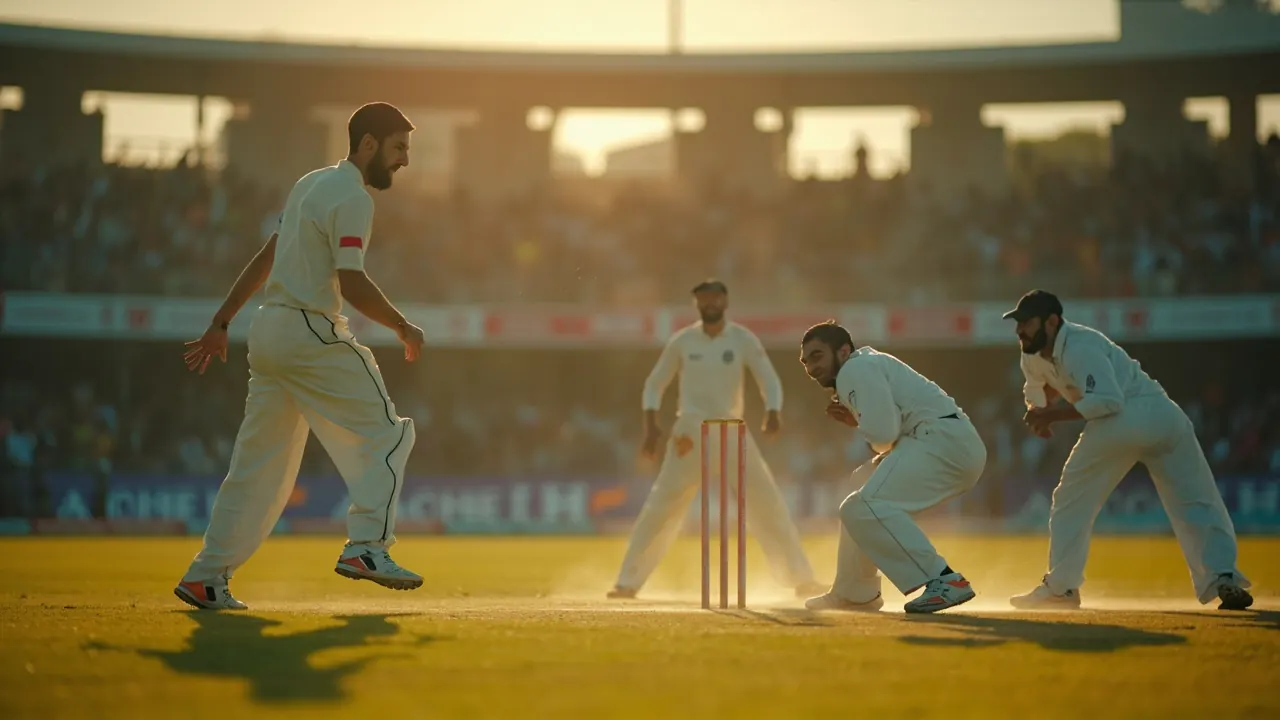
Death-overs field setting that won the Wankhede game
A late-innings field change at 18.2 overs set up the winning over. We break down the geometry, the matchup, and the captain's call.
The field change at 18.2
With the batting side needing 14 off 9, the captain walked to the leg side and repositioned the field for the second ball of the 19th over. The change moved a fielder from deep cover to short third-man and pulled a long-off back to a straight-ish mid-off. It was not a dramatic reshuffle — three fielders moved — but the geometry of the matchup changed completely.
The batter at the crease had cleared the infield on the off-side twice in the previous over; the captain's read was that the batter was looking to hit over the off-side ring, and the field change pulled the off-side boundary back. The next ball was a slower bouncer that the batter top-edged to short third-man. The match turned on that single field change.
What the captain saw
The desk's read on the captain's move is that he was not reacting to the batter's strength but to the bowler's strength. The bowler at the time had a slower ball that had been working all evening — the captain pulled the field to match the slower-ball trajectory. A batters who had been hitting over the off-side ring was suddenly facing a short third-man who was fielding a slower-ball trajectory.
Reading captains in the field
The field tells you what the captain thinks the next ball will be, not what the batter can do. Field changes at the death are anchored to the bowler's strength more often than to the batter's weakness.
The matchup logic
The matchup was classic late-innings: a bowler with a slower ball that had been working, against a batter who had been clearing the infield on the off-side. The captain had two choices — pull the boundary back, or bring the fielder in to save the single and dare the batter to clear the boundary. The captain chose the first option.
The logic behind the choice is that a slower ball that is hit straight will go to long-off or long-on, not over the infield on the off-side. By pulling the off-side boundary back, the captain accepted that the slower ball could be hit straight (and accepted the runs that come from that), but he cut off the batter's preferred scoring area. The geometry of the field now matched the trajectory of the slower ball.
Why it worked
It worked because the batter could not adjust in a single delivery. The batter had been hitting the pace bowler over the off-side infield; the slower ball to short third-man is a different shot, and the batter did not have time to read the change and adjust his trigger movement. The result was a top-edge to the repositioned fielder.
For fantasy selectors, the takeaway is that matchup reads in the death overs are not about who is on strike — they are about what the bowler can do. A bowler with a working slower ball is a more used death-overs asset than the economy line suggests. The desk's death-overs bowler model already accounts for slower-ball reliability; the Wankhede game confirmed the model's edge in this fixture type.
What we will watch next time
The desk will watch for two signals in the next Wankhede death-overs phase: (1) whether slower balls continue to be the highest-use delivery in the second half of the death, and (2) whether captains continue to pull fields to match slower-ball trajectories rather than to neutralise batter strength. If both signals hold, the death-overs bowler model's slower-ball weight increases; if either signal flips, the model is revised.
Why death-overs bowler models under-rate slower balls
Most fantasy models under-rate slower balls at the death because the economy line does not capture the value of the dot-ball delivery. A slower ball that beats the batter for a dot is worth more than a half-volley that goes for a single, even though the economy line records both as a similar event. The desk's death-overs bowler model separates dot-ball reliability from boundary suppression, and the two together are a better predictor of fantasy value than the economy line alone.
The Wankhede game was a confirmation: the bowler whose slower-ball reliability held up under pressure was the decisive performer, even though his economy line was only marginally better than the other death-overs quicks on the day.
What the desk will watch next
The desk will watch two signals in the next Wankhede death-overs phase: (1) whether the slower-ball reliability model holds up under different conditions (a slow surface, a chasing side with a strong powerplay), and (2) whether captains continue to pull fields to match slower-ball trajectories. If both signals hold across the next three death-overs phases, the slower-ball weight in the model increases by a tier. If either signal flips, the model is revised and the death-overs quota call is updated.
For selectors, the takeaway is that death-overs bowler models are not static. The desk's model updates when two consecutive matches confirm a pattern; readers who use the model should re-check the death-overs quota call after each fixture week.
Reading the captain's body language in the field
The captain's body language in the field is a useful secondary signal — a captain who walks to the leg side slowly is usually thinking about the field, not the bowler; a captain who walks quickly is usually reacting to a previous delivery. The desk's working rule is to watch the body language at the changeover between overs, where the captain has a clear moment to read the batter's position and adjust.
For fantasy readers, the body language read is not a primary signal — it is a tiebreaker when the conditions read and the role hierarchy are ambiguous. The Wankhede game was not ambiguous: the captain's field change was a deliberate matchup read, and the body language matched the deliberateness.
What the desk does not do at the death
The desk does not run a live over-by-over feed at the death. The death-overs coverage on the live desk is a single post-match review that names the decisive performer and walks through the captain-case logic. Over-by-over coverage is the broadcast's job, not the desk's job; the desk's role is to interpret the evidence, not to relay it.
For selectors, the takeaway is that the desk's death-overs coverage is a working surface, not a broadcast feed. Readers who want over-by-over updates should use the broadcast; readers who want interpretation should use the desk.
How does the desk model death-overs bowlers?
The desk tracks slower-ball reliability, yorker accuracy, and bouncer execution separately. A bowler with two of the three working in the same match is a high-use death pick.
Why does the field change at 18.2 matter for fantasy?
It doesn't directly — but the underlying read (slower-ball trajectory vs batter strength) does, because it changes how the desk weights slower-ball reliability in the death-overs bowler model.