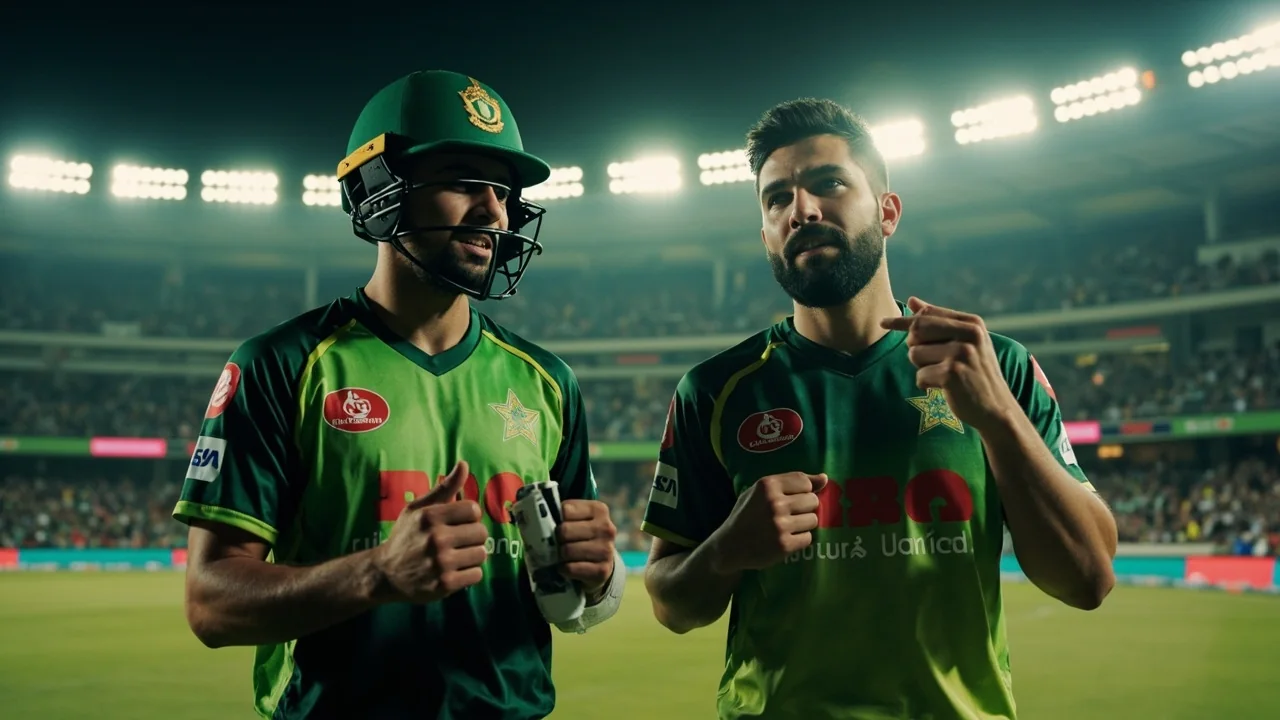
On Sunday, 26 April 2026, Pakistan Super League 2026's 40th and final league-stage fixture was scheduled between Multan Sultans and Islamabad United at National Stadium, Karachi, with the toss around 7:15 PM PKT and first ball at 7:30 PM PKT after the broadcaster's pre-match coverage from 7:00 PM PKT. The brief published that morning by Cricketwebs covered squads, head-to-head, the Karachi pitch and weather forecast, predicted playing XIs, captain and vice-captain picks, and a 63-37 leaning toward Multan on probability. This piece revisits that pre-toss record for selectors who still use league-finale notes when they audit how Karachi shaped captaincy choices later in the bracket.
Both teams had already qualified for the playoffs before the final league fixture. Multan sat second on 12 points with a 0.450 net run rate and a 6W-3L record; Islamabad sat third on 11 points with a 1.766 net run rate and a 5W-3L record. The match therefore did not settle who reached the knockout stage, only the route. The winner advanced directly to the Qualifier against Peshawar Zalmi on Tuesday in Karachi; the loser dropped to Eliminator 1 on Wednesday in Lahore. For fantasy selection, the fixture mattered less as a winner-loser call and more as a captain-case map: which top-order anchor was safest on Karachi's true-bounce surface, which leg-spinner carried the middle-overs wicket route, and whether the dew factor would push the toss-time decision toward chasing.
Why this brief still matters
PSL 2026 league-finale briefs age quickly once the playoffs start, but the conditions map and the named personnel assumptions age slower. Karachi's recent PSL evening sample already pointed to a first-innings band of 160-180 with chasing teams winning four of the last five fixtures under dew — a small but consistent signal. When a venue repeatedly rewards a chase under evening moisture, captaincy cases built around chase-side middle-order anchors hold more weight than first-innings-only models. Revisiting the 26 April notes is useful because they locked that conditions read against two specific squads and two clear form stories, which is how a selector later checks whether Karachi should still be treated as a balanced-evening ground rather than a generic subcontinent T20 surface.
The brief also preserved a clean snapshot of predicted personnel before the toss. Predicted XIs are not confirmed sheets, and the original report treated them as such. Holding those names — Multan captain Ashton Turner alongside Sahibzada Farhan and Steven Smith at the top, Islamabad captain Shadab Khan alongside Devon Conway and Sameer Minhas — keeps the pre-toss model honest when later reviews compare what was expected with what walked out. For the live desk's working method, that comparison is the point of filing a retrospective rather than rewriting history as if the team sheets had always been known.
How to read a retrospective brief
Treat every predicted XI, weather percentage, form line and captain pick as time-stamped evidence from 26 April 2026. Use it to understand the decision environment selectors faced before 7:30 PM PKT, not as a substitute for the confirmed sheet or the finished result.
Fixture context: a table-finale that still changed the bracket
PSL 2026's league stage closed with a fixture that read, on paper, like a dead rubber — both teams already through. The bracket reality was different. The winner of the 26 April match went to the Qualifier to face Peshawar Zalmi on Tuesday in Karachi; the loser dropped to Eliminator 1 on Wednesday in Lahore, with the survivor of Eliminator 1 then advancing to face the Qualifier loser in Eliminator 2. A league-finale loss therefore cost a side one extra match in the knockout round, with travel and recovery costs baked in.
For fantasy selection, the practical consequence was that both captains had an incentive to manage their key personnel carefully. Confirmed XIs were expected to follow the brief's predicted sheets, but workload ceilings on frontline quicks and finishing all-rounders were higher than they would have been for a dead fixture. The brief did not invent rotation rumours; it stayed with the predicted elevens and named impact options. That restraint matters when later audits compare the pre-toss captain case against what actually happened on the field — the captain case is built on expected roles, not on optimistic rotation speculation.
Karachi's evening conditions also shaped the fixture's neutral read. Dew under lights at National Stadium had been a steady factor across recent PSL editions, and the broadcaster's 7:00 PM PKT pre-match window meant the powerplay would fall under lights. For a side that trusted its middle-order chase more than its death-overs defence, that was a relevant input. For a side that trusted its new-ball pair on true bounce, the toss-time decision still pointed to bat-first rather than chase-first. The captain-case layer further down the piece is where those two readings meet.
Why a league finale still moved fantasy choices
The 26 April fixture decided the bracket route, not the qualifier places. For selectors that meant captain cases built on role stability, not on dead-rubber experimentation — Multan's top-order anchors and Islamabad's chase-side middle order stayed central to the brief even with both sides already through.
Multan Sultans' form line
Multan Sultans entered the fixture having already secured second place on the table with 12 points and a 0.450 net run rate, but the form arc that got them there was uneven. Six wins and three losses on the league stage read as a comfortable qualification, yet three of those losses had come against sides that finished below them in the table. The brief did not paper over the inconsistency; it named the top-order dependence on Sahibzada Farhan, the role Steven Smith had settled into at first-drop, and the fact that captain Ashton Turner's batting slot sat lower than his leadership weight suggested.
Farhan's league numbers were the standout. Across the season he had accumulated 335 runs with 22 sixes at a strike rate of 170, numbers that placed him among the leading fantasy scorers at the top of the order. Smith's 337 runs at a 164 strike rate, capped by a recent 106 off 50 balls, gave Multan a one-two top-order combination that could absorb a powerplay wicket without collapsing the chase structure. The brief noted that dependence without endorsing it. For selectors, two top-order anchors both in form on a Karachi surface that had been playing true meant the captain-case conversation almost always began with one of them.
Multan's bowling was led by Peter Siddle, with 12 wickets in the campaign, and an all-round group around Mohammad Nawaz, Arafat Minhas and Imran Randhawa. The brief framed the bowling as workmanlike rather than strike-heavy; it kept the side in games through dot-ball pressure and the leg-spin option of Mohammad Wasim Jr. in the middle overs, but it rarely ran through opposition batting lineups in a single spell. The fantasy implication was that bowling credits on Multan quicks were utility-tier rather than ceiling-tier, while wicketkeeper Josh Philippe and the lower-order batters were the upside diversifier for deeper contests.
The earlier head-to-head meeting between these two sides had gone Multan's way by five wickets, a fact the brief named without overstating. One match in the same season is a thin sample for any "team X owns team Y" narrative, but it was at least a current data point on the same surface rules. For the captain-case layer below, that earlier win mattered more as a confidence anchor for Multan's middle order than as a probability claim.
Islamabad United's form line
Islamabad United arrived third on the table with 11 points and a 1.766 net run rate — a healthier number than Multan's despite the lower points tally. Five wins and three losses, with the NRR cushion coming from one or two heavy wins earlier in the campaign, suggested a side that could swing the run rate in a single batting burst. The brief tracked that pattern carefully and named it as Islamabad's main selection hook: not consistency, but the chase-side ceiling when Devon Conway and Sameer Minhas fired together at the top.
Conway had 247 runs at a 130 strike rate; Minhas had 298 runs at a 154.54 strike rate with three fifties. Together they formed a left-right top-order pair that offered both anchor and accelerator options, with Mark Chapman and Mohsin Riaz behind them as the middle-order buffer. The brief was clear-eyed about the gap between Minhas's ceiling and his floor: a 154 strike rate with three fifties is exactly the kind of profile that produces a 70 off 35 on a good night and a 12 off 18 on a bad one. For selectors, that meant Minhas was a high-variance captain pick on a Karachi true-bounce surface — strong upside, real downside.
The bowling picture was anchored by Shadab Khan, whose 13 wickets and 109 runs at a 173 strike rate placed him firmly in the all-round captain conversation. His leg-spin economy of 6.24 was the best of the leg-spinners on show in that fixture and gave Islamabad a credible middle-overs wicket route against Multan's right-hand-heavy top order. Around him, Chris Green and Imad Wasim offered spin depth, with Faheem Ashraf and Richard Gleeson completing the pace group. The brief noted Salman Mirza in the predicted XI but flagged him as an avoid pick on the fantasy desk's read — a small but useful signal that not every predicted name carried equal selection weight.
Islamabad had won four of the last five PSL head-to-head meetings with Multan going into the 26 April fixture, a fact the brief flagged because it cut against Multan's recent five-wicket win earlier in the same season. That tension — recent current-season win going one way, longer recent-form head-to-head going the other — is exactly the kind of evidence mix that selectors should weigh honestly rather than collapsing into a single narrative.
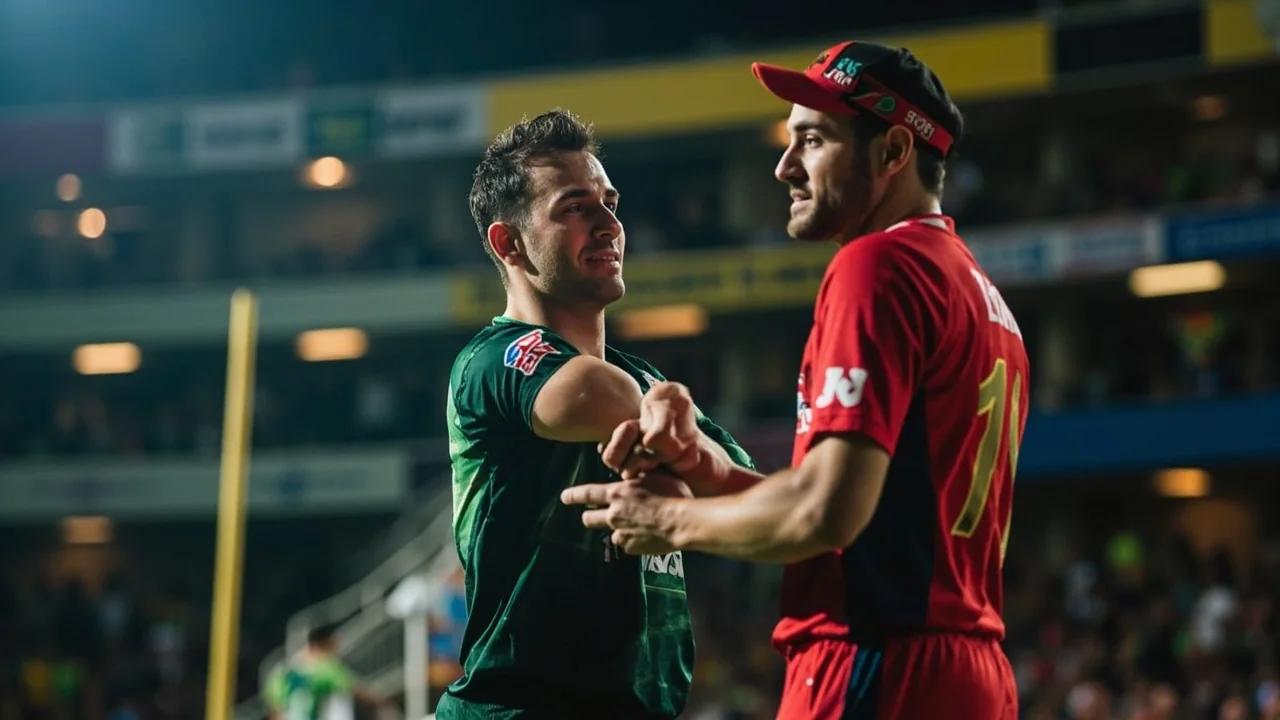
Where the middle-overs wicket route lived
Shadab Khan's leg-spin at a 6.24 economy and Multan's right-hand-heavy top order gave Islamabad the cleanest middle-overs wicket route in the brief. For captain-case work, that made Shadab the safer all-round pick on a Karachi true-bounce surface, with Minhas the higher-variance swing option.
Head-to-head ledger
Across 19 previous PSL meetings between the two sides, Multan Sultans held 9 wins and Islamabad United held 10. That is essentially parity with a one-match edge to Islamabad. The brief did not dress that as a "Islamabad owns Multan" claim; it noted the near-even ledger and added the season-specific overlays: Multan's five-wicket win earlier in PSL 2026, and Islamabad's four-of-five recent PSL meetings won against Multan. A selector who wanted to use the head-to-head had to hold those two readings together rather than pick one.
Where head-to-head actually helped was in tempering the league-finale framing. A Multan side that had already locked second place was not suddenly a soft touch because their recent head-to-head was slightly worse; the table position was the more recent, more relevant signal. An Islamabad side on 11 points with a strong NRR was not suddenly the favourite because of the 10-9 historical edge; the earlier five-wicket loss in the same season was a more current, more relevant signal. The brief recorded the numbers and moved on. That is the right weight for a near-even series when the live variables are toss, dew, surface behaviour and who holds the new ball.
| Record item | Figure from the 26 April brief |
|---|---|
| PSL meetings played | 19 |
| Multan Sultans wins | 9 |
| Islamabad United wins | 10 |
| PSL 2026 earlier meeting | Multan won by five wickets |
| Last five PSL meetings won by Islamabad | 4 |
| Multan PSL 2026 standing | 2nd, 12 pts, NRR 0.450, 6W-3L |
| Islamabad PSL 2026 standing | 3rd, 11 pts, NRR 1.766, 5W-3L |
| Karachi PSL first-innings band (recent) | 160-180 (recent evening PSL sample) |
| Karachi chase record under dew (recent) | 4 of 5 recent evening fixtures |
Karachi pitch and weather record
The pitch package in the original brief was explicitly balanced. National Stadium, Karachi, was expected to play with true bounce and no significant turn through the evening window, in line with the recent PSL evening sample at the venue. First-innings totals in recent PSL games there had sat between 160 and 180, with chasing teams winning four of the last five evening fixtures under dew. That is a small sample, and the brief treated it as a directional band rather than a law — but for a 7:30 PM PKT start in late April, four chase wins in five evening games is enough to keep second-innings batting depth and middle-overs spin on a selector's checklist.
Weather framed a settled evening. Clear sky, 26-30°C temperature band, 60-70% humidity, 10-15 km/h wind, high dew factor after the first innings and under 5% rain probability. Karachi in late April is a warm, humid evening window with steady moisture once the lights come on. The brief noted the dew factor because it shaped two distinct decisions: whether the captain who won the toss would prefer to bat first on a true-bounce surface and trust his quicks at the death, or chase under lights and trust his middle order to handle the moisture. On the recorded chase record, the brief leaned toward chase being the better call on the evening, but did not make that decision for either captain.
Taken together, the pitch and weather notes pushed toward a contest that rewarded clear-headed role picking rather than heroic all-round selections. A 160-180 first-innings band does not need a death-overs specialist of the very highest tier; it needs a frontline quick who can hold a hard length and a spinner who can bowl stump-to-stump through the middle overs. Captain cases built around that brief sat naturally with anchor-and-accelerator top-order picks and all-round spinners who could contribute with both bat and ball.
Predicted playing XIs
The original report listed full predicted elevens for both sides. For Multan Sultans: Sahibzada Farhan, Steven Smith, Shan Masood, Josh Philippe (wicketkeeper), Ashton Turner (captain), Mohammad Nawaz, Arafat Minhas, Imran Randhawa, Peter Siddle, Mohammad Wasim Jr, Muhammad Ismail. For Islamabad United: Devon Conway (wicketkeeper), Sameer Minhas, Mark Chapman, Mohsin Riaz, Shadab Khan (captain), Haider Ali, Faheem Ashraf, Chris Green, Imad Wasim, Richard Gleeson, Salman Mirza.
| Role band | Multan Sultans (predicted) | Islamabad United (predicted) |
|---|---|---|
| Openers / keepers | Sahibzada Farhan, Steven Smith, Josh Philippe (wk) | Devon Conway (wk), Sameer Minhas |
| Middle order | Shan Masood, Ashton Turner (c), Mohammad Nawaz, Arafat Minhas, Imran Randhawa | Mark Chapman, Mohsin Riaz, Shadab Khan (c), Haider Ali |
| Bowling core | Peter Siddle, Mohammad Wasim Jr, Muhammad Ismail | Faheem Ashraf, Chris Green, Imad Wasim, Richard Gleeson, Salman Mirza |
| Captain | Ashton Turner | Shadab Khan |
Reading those sheets as a selector on the day meant separating locked roles from flexible ones. Farhan, Smith, Conway and Minhas were the four clear top-order anchors. Turner and Shadab Khan carried captaincy plus middle-order batting, with Shadab's all-round weight noticeably heavier on the fantasy credit tier. Nawaz and Imad Wasim offered dual-skill pathways for both sides; Multan's pace ledger was shorter and more dependent on Siddle, while Islamabad's pace and spin depth was distributed across five named bowlers. If the surface played true to the 160-180 first-innings band, those quicks were not luxury picks — they were the primary wicket route with the new ball and at the death.
Reading the predicted sheets as a captain band
Without inventing a finished scorecard, the conservative captain band sat with top-order anchors who had role security — Farhan, Smith, Conway — while the aggressive band sat with high-ceiling all-rounders (Shadab Khan) or chase-side swing picks (Minhas) if the toss confirmed a chase game on a 160-180 surface under dew.
Captain and vice-captain cases
The original brief named its captain and vice-captain picks directly. Captain picks were Shadab Khan for Islamabad or Steven Smith for Multan, with vice-captain picks sitting with Sahibzada Farhan or Sameer Minhas. That is a deliberately tight two-by-two grid, and it reflects how the desk treats the all-rounder-versus-top-order captain question on a balanced surface.
Shadab Khan's case rested on his 13 wickets and 109 runs at a 173 strike rate, with a leg-spin economy of 6.24 that gave him middle-overs wicket route against Multan's right-hand-heavy top order. On a Karachi true-bounce surface where the brief expected a 160-180 first-innings band, a frontline leg-spinner who also bats at a 170-plus strike rate is the rare kind of captain pick that scores through both departments. Steven Smith's case rested on his 337 runs at a 164 strike rate and the recent 106 off 50 balls that showed his ceiling was intact. Smith was the conservative captain band: less upside than Shadab in a single innings, but a tighter floor on a surface where Multan's top-order stability was the brief's main anchor.
For vice-captains, Sahibzada Farhan offered Multan's top-order power with 22 sixes and a 170 strike rate across the season. Sameer Minhas offered Islamabad's chase-side ceiling with three fifties at a 154 strike rate and the highest single-innings upside in the brief's named personnel. The choice between them mapped almost directly onto the toss question: Farhan was the safer vice-captain if Multan batted first, Minhas the higher-ceiling vice-captain if Islamabad chased. The brief did not record the toss call; a retrospective cannot invent one. What it can say is that any selector who ignored the venue's chase-side lean was fighting the only multi-fixture evening sample the preview supplied.
Avoid picks the brief flagged
Salman Mirza (Islamabad) and Shehzad Gul (Multan) were the avoid picks the desk named on the 26 April brief. Avoid picks are not zero-value picks — they are names the desk reads as lower-floor than their predicted slot suggests, often because of role uncertainty or matchup difficulty against the opposition's batting shape.
Broadcast, toss window and avoid picks
Broadcast was listed on Fancode for digital streaming and TAPMAD TV for television, with commentary in English and Urdu. Toss was scheduled for 7:15 PM PKT and first ball for 7:30 PM PKT, with pre-match coverage from 7:00 PM PKT. Those times locked the fantasy cut-off for most Pakistan-based contests to the start of play, which meant any serious revision had to happen in the half-hour after the toss rather than across a long afternoon. The clear-sky forecast and under-5% rain probability meant there was no realistic rain-reduced lottery in the model — the brief ran as a full twenty-overs-each evening.
In practical desk terms, the toss window on a 160-180 first-innings ground with a four-of-five chase record is less about "bat or chase" folklore and more about whether the captain who wins it trusts the chase-side sample enough to bowl first. The brief did not record the actual toss call; a retrospective cannot invent one. What it can say is that any selector who ignored the venue's chase-side lean in the evening was fighting the only multi-fixture sample the preview supplied, and that the predicted captain-case grid (Shadab or Smith) sat comfortably across both bat-first and chase-first outcomes.
What the brief left selectors
Months on, the 26 April Karachi package still works as a teaching brief for PSL league-finale nights. It tied a concrete Multan top-order form to named roles rather than vague "in-form batters" language. It kept Islamabad's high-NRR chase ceiling visible without erasing the four-of-five head-to-head lean the other way. It put a near-even head-to-head in its place, with the season-specific overlays on top. And it anchored everything to a Karachi evening sample that preferred chase under dew on a true-bounce surface after a clear-sky forecast.
The lasting selection lesson is procedural. When a side has already locked its place but the fixture still decides the bracket route, do not only chase ceiling picks — check whether the named personnel matches the venue and the conditions, as the brief did when it placed Shadab Khan at the top of the captain list on a true-bounce surface. When a side's strength is its chase-side ceiling rather than its first-innings consistency, do not auto-fade the batters because the surface reads balanced — check whether the evening dew window and the four-of-five chase sample match the team shape, as the brief did when it kept Minhas on the vice-captain grid. When a venue's first-innings band sits between 160 and 180 with chase winning four of the last five, build for a 170-par contest even if both attacks look strike-light on paper.
That is the present-day use of an old Sunday preview. It will not replace a confirmed XI or a ball-by-ball card. It will, however, keep Karachi from being misread as a generic subcontinent T20 night, and it will keep both of these PSL 2026 squads attached to the actual roles the morning brief recorded before the 7:30 PM PKT first ball. For ongoing match-day structure and how those stages are filed, the desk's working surface remains the broader predictions desk, where scenario reads sit alongside the archived league-stage briefs like this one.
When was the original MS vs ISU brief published?
The Cricketwebs preview that underpins this retrospective was published on 26 April 2026 at 02:26 PKT, the morning of the PSL 2026 40th and final league-stage fixture at National Stadium, Karachi.
What toss and start times were listed?
Toss was scheduled for 7:15 PM PKT and the match for 7:30 PM PKT, with pre-match coverage from 7:00 PM PKT. Broadcast was listed on Fancode (digital streaming) and TAPMAD TV (television), with commentary in English and Urdu.
What did the brief say about Karachi's scoring pattern?
The brief expected a true-bounce balanced surface with a first-innings band of 160-180 in recent PSL games at National Stadium. Chasing teams had won four of the last five evening fixtures under dew.
Were the playing XIs confirmed in the source?
No. The source listed predicted elevens for both sides. Confirmed sheets would only have been known after the toss-time announcement and are outside this retrospective's factual record.
What were the named captain and vice-captain picks?
The brief named Shadab Khan (Islamabad) or Steven Smith (Multan) as captain picks, with Sahibzada Farhan or Sameer Minhas as vice-captain picks. Avoid picks were Salman Mirza (Islamabad) and Shehzad Gul (Multan).
How close was the MS-ISU head-to-head entering the match?
The brief recorded 19 previous PSL meetings, with Multan Sultans on 9 wins and Islamabad United on 10. Islamabad had won four of the last five PSL head-to-head meetings, though Multan had won the earlier PSL 2026 meeting by five wickets.