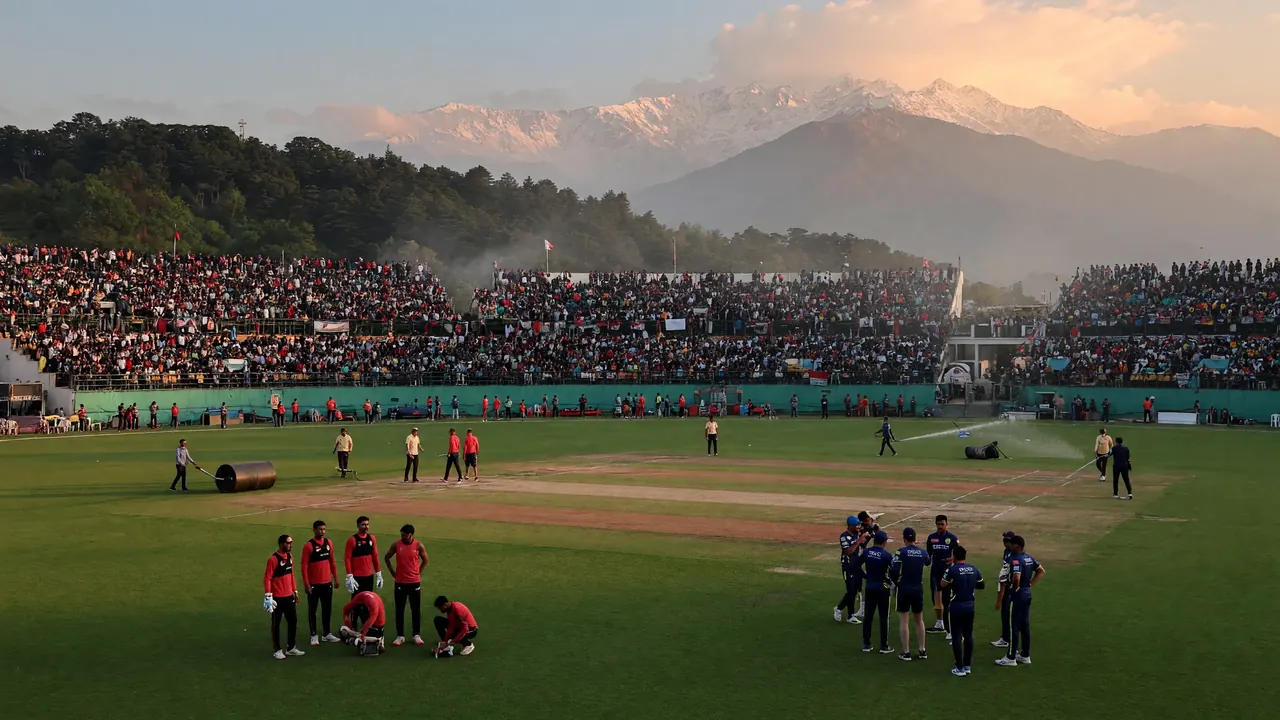
On Monday, 11 May 2026, Punjab Kings hosted Delhi Capitals at HPCA Stadium in Dharamsala in an IPL 2026 fixture that had already been framed by a full pre-match brief. The Times of India desk published that brief at 10:31 IST the same morning, covering form, head-to-head, pitch behaviour, weather, predicted XIs, toss timing and broadcast details. This piece is a retrospective reading of that record — not a live update and not a claim about the final scorecard — written for readers who still use day-of-play notes when they audit how a mountain venue shaped selection choices later in the season.
The fixture sat at an awkward point in both campaigns. Punjab Kings had slipped after an unbeaten start. Delhi Capitals still had a theoretical route into the knockout bracket, though the numbers left little margin. For fantasy selectors, the brief mattered less as a winner-loser call and more as a conditions and role map: who was likely to bat where, which bowlers carried the new ball, and whether the evening temperature and rain window would push either captain toward a first-innings total on a ground that had been scoring high since 2023.
Why this brief still matters
Match briefs age quickly, but venue patterns and role templates do not. Dharamsala's IPL sample since 2023 already pointed to a first-innings average of 209 across five matches — the highest among IPL venues in that span — with teams batting first winning four of those five. When a ground repeatedly rewards a posted total, captaincy cases built around openers and first-innings death bowlers hold more weight than chase-only models. Revisiting the 11 May notes is useful because they locked that venue read against two specific squads and two clear form stories, which is how a selector later checks whether a mountain fixture should still be treated as a bat-first outlier.
The brief also preserved a clean snapshot of personnel assumptions before the toss. Predicted XIs are not confirmed sheets, and the original report treated them as such. Holding those names — including impact substitutes Yuzvendra Chahal for Punjab Kings and Mukesh Kumar for Delhi Capitals — keeps the pre-toss model honest when later reviews compare what was expected with what walked out. For the live desk's working method, that comparison is the point of filing a retrospective rather than rewriting history as if the team sheets had always been known.
How to read a retrospective brief
Treat every predicted XI, weather percentage and form line as time-stamped evidence from 11 May 2026. Use it to understand the decision environment selectors faced before 7:00 PM IST, not as a substitute for the confirmed sheet or the finished result.
Match setting at HPCA
HPCA Stadium in Dharamsala is a high-altitude IPL venue with a short evening window once the sun drops behind the hills. The original brief set the toss for 7:00 PM IST and the match for 7:30 PM IST. That schedule put the powerplay under lights and the death overs in cooler air, which is the standard mountain-night pattern rather than a daytime heat contest. For role stability, the timing favoured pace units that could hold a hard length early and death specialists who could finish under lights, rather than long spells of pure spin through a dry afternoon.
The fixture was a home game for Punjab Kings against Delhi Capitals. Home advantage at Dharamsala is less about crowd noise alone and more about how often a side has already practised on the same square during the season. The brief did not invent a home-win percentage for 2026; it stayed with the shared venue sample since 2023 and the two teams' immediate form. That restraint is worth keeping when older previews are reused as teaching material — the solid ground is the venue band and the named personnel, not a manufactured home narrative.
Readers who still track day-of-play coverage can place this fixture inside the broader live desk workflow: pre-match notes, toss revision, confirmed XI, then post-match audit. The original 11 May package sat firmly in the first stage. For ongoing match-day structure and how those stages are filed, the desk's working surface remains the live matches desk.
Punjab Kings' form line
Punjab Kings entered the contest after three consecutive losses, a sharp change from earlier in the tournament when they had been the only unbeaten side. The morning notes traced the downturn across three roles rather than one collapse: dropped chances in the ring, Arshdeep Singh bleeding runs with the new ball and at the death, and Priyansh Arya plus Prabhsimran Singh failing to set the tempo up top. Those are selection-facing notes, not colour. When the openers slow and the left-arm seamer leaks, fantasy credits locked into the top order and early seam become higher variance than the early-season model suggested.
Captain Shreyas Iyer's public message, as recorded in the brief, was to stick with the aggressive approach that had worked when Punjab Kings were unbeaten. Aggression at Dharamsala is not automatic licence for every middle-order hitter. On a ground averaging first-innings scores above 200 in the recent sample, aggression mainly means preserving the powerplay intent and trusting the middle order to keep the scoring rate once the ball softens. For selectors, Iyer's own middle-order role stayed central: he was named captain in the predicted XI and sat in the engine room rather than as a pure floater.
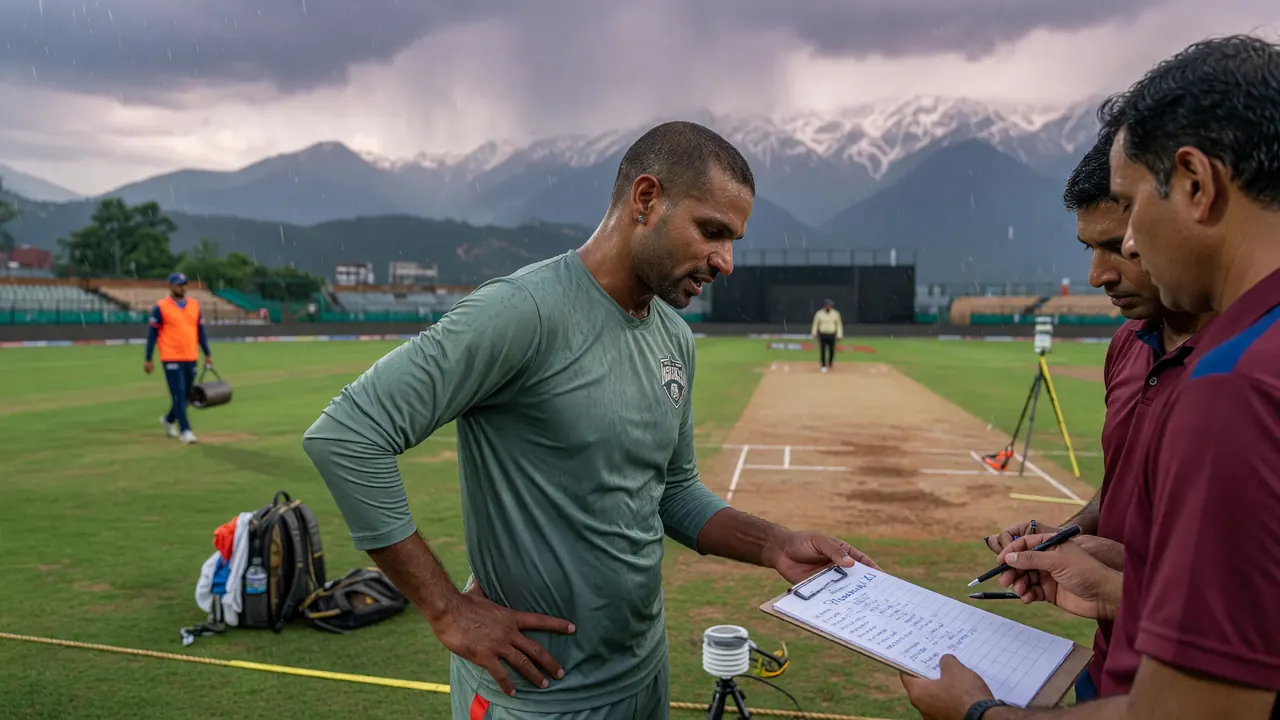
Where the PBKS slide showed up
The brief did not pin the skid on one night. It stacked catching lapses, Arshdeep's costly spells, and a quiet start from Arya and Prabhsimran — a three-part drag that made the early-season unbeaten run a weak baseline for late-May captaincy calls.
The predicted Punjab Kings balance still looked like a side built to attack with bat depth and overseas pace. Cooper Connolly and Marcus Stoinis supplied left-right all-round options; Marco Jansen and Lockie Ferguson joined Arshdeep in the pace group; Vijaykumar Vyshak filled a seam-support role; Suryansh Shedge and Shashank Singh thickened the middle. Yuzvendra Chahal was listed as the impact option, which kept a pure wrist-spin lever available if the surface offered more grip than a flat high-scorer usually does. None of that cancelled the form warning. It only showed that the squad still had levers if the openers failed again.
Delhi Capitals' form line
Delhi Capitals arrived having lost five of their previous six matches. The brief was blunt about the batting on slow pitches and about Kuldeep Yadav's indifferent form. Axar Patel, as captain, had already spoken in terms that sounded like a longer rebuild — signals that unused squad members could feature before the campaign closed. That framing mattered for fantasy more than any slogan about pride: when leadership telegraphs rotation and next-cycle thinking, fringe names gain role upside while locked credits on out-of-form regulars get riskier.
Even so, the table still offered Delhi Capitals a narrow path into the knockout conversation; the odds were thin rather than closed. Thin is not zero, and the brief did not treat the fixture as a dead rubber in formal terms. For selection, a long-shot table path usually still produces a competitive XI, but it can also free a coach to blood reserves without short-term panic. The predicted sheet still leaned on recognised names — Pathum Nissanka and KL Rahul at the top, Nitish Rana and Sameer Rizvi in the middle, Axar as captain, Tristan Stubbs and Ashutosh Sharma for finishing punch — rather than a full youth experiment. Mukesh Kumar was the named impact bowler behind Mitchell Starc, Lungi Ngidi and Auqib Nabi in the pace group, with Vipraj Nigam in the XI as a spin-bowling option alongside Axar.
The batting note on slow pitches is the one that needed care at Dharamsala. The venue's recent IPL sample was not a classic slow turner; it had been a high first-innings ground. If Delhi Capitals' recent struggles were specifically against grip and lack of pace-on, a truer high-scoring surface could ease the middle order even while Kuldeep's indifferent form limited the wrist-spin ceiling. Selectors who flattened every Delhi Capitals batter because of the five-in-six slide risked missing that surface distinction. The brief's value was that it kept both facts in view: poor recent results, and a venue that had not been playing like the slow decks that hurt them.
Head-to-head ledger
Across 35 previous meetings, Punjab Kings held 18 wins and Delhi Capitals 17. That is as close to parity as an IPL rivalry gets. Head-to-head at that balance is a weak predictor for a single night; it mainly tells selectors not to overweight historical dominance narratives. The more useful layer on 11 May was current form layered on venue tendency, not the 18-17 split by itself.
Where head-to-head still helps is in tempering overreaction. A Punjab Kings side on a three-match losing run was not suddenly a soft touch against a Delhi Capitals side that had owned them for years — because Delhi Capitals had not owned them. Likewise, Delhi Capitals' long-shot table position did not invent a psychological edge that the ledger refused to support. The brief recorded the numbers and moved on. That is the right weight for a near-even series when the live variables are pitch average, weather clearance and who holds the new ball.
| Record item | Figure from the 11 May brief |
|---|---|
| Meetings played | 35 |
| Punjab Kings wins | 18 |
| Delhi Capitals wins | 17 |
| Dharamsala IPL first-innings average since 2023 | 209 (5 matches) |
| Bat-first wins at Dharamsala in that sample | 4 of 5 |
Pitch and weather record
The pitch package in the original brief was unusually specific. Since 2023, Dharamsala's average first-innings IPL score sat at 209 from five matches, the highest among IPL venues in that span, and teams batting first had won four of those five. That is a small sample, and the brief effectively treated it as a directional band rather than a law. Still, for a Monday night in May, four bat-first wins in five is enough to keep first-innings batting depth and death-overs bowling shares near the top of a selector's checklist.
Weather framed a two-part day. Afternoon thunderstorms were possible earlier, with rain chance around 55% at 3 PM. From the 7:00 PM IST toss through the match, the forecast rain chance was 0%. Daytime peak temperature was expected around 19°C, falling to nearly 16°C in the evening, with the Dharamsala evening temperature also described around 14°C in the broader venue note. Cool, dry air under lights is a different bowling problem from humid coastal dew. Swing can linger a touch longer with the new ball; sweat and dew-based reverse later are less reliable. Pace bowlers who hit a hard length often hold more value than pure wet-ball change-up specialists on nights like that.
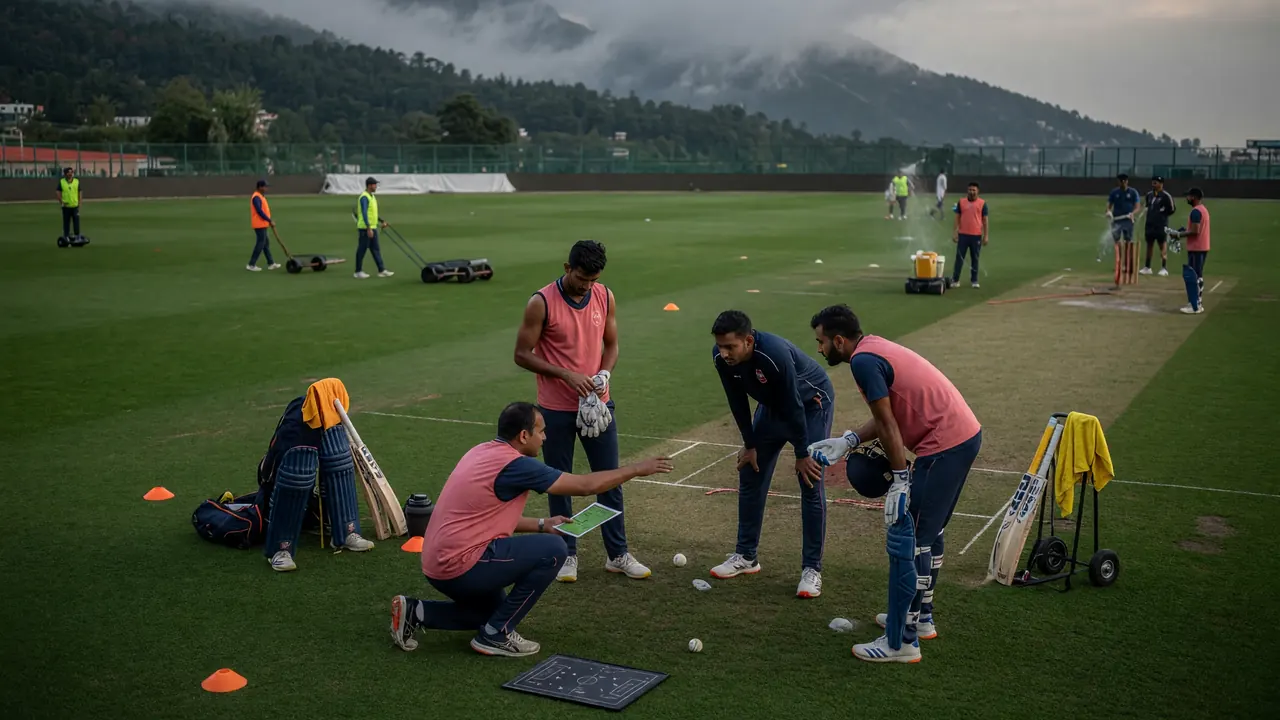
What the weather window locked in
Afternoon storm risk cleared in the forecast by toss time. The working assumption for selectors after 7:00 PM IST was a dry contest in cool air, not a rain-reduced lottery, which kept full-quota bowling shares and standard death overs in the model.
Taken together, the pitch and weather notes pushed toward a full game with a meaningful first-innings total. They did not guarantee a 200-plus score on the night — five-match averages never do — but they did justify building teams that could survive a 190-210 band rather than a 150-160 grind. That is why the brief's predicted batting depth on both sides, and the presence of multiple overseas quicks, aligned with the venue rather than fighting it.
Predicted playing XIs
The original report listed full predicted elevens plus impact names. For Punjab Kings: Priyansh Arya, Prabhsimran Singh (wicketkeeper), Cooper Connolly, Shreyas Iyer (captain), Suryansh Shedge, Marcus Stoinis, Shashank Singh, Marco Jansen, Vijaykumar Vyshak, Lockie Ferguson, Arshdeep Singh, with Yuzvendra Chahal as impact. For Delhi Capitals: Pathum Nissanka, KL Rahul (wicketkeeper), Nitish Rana, Sameer Rizvi, Axar Patel (captain), Tristan Stubbs, Ashutosh Sharma, Vipraj Nigam, Auqib Nabi, Mitchell Starc, Lungi Ngidi, with Mukesh Kumar as impact.
| Role band | Punjab Kings (predicted) | Delhi Capitals (predicted) |
|---|---|---|
| Openers / keepers | Priyansh Arya, Prabhsimran Singh (wk) | Pathum Nissanka, KL Rahul (wk) |
| Middle order | Cooper Connolly, Shreyas Iyer (c), Suryansh Shedge, Marcus Stoinis, Shashank Singh | Nitish Rana, Sameer Rizvi, Axar Patel (c), Tristan Stubbs, Ashutosh Sharma |
| Bowling core | Marco Jansen, Vijaykumar Vyshak, Lockie Ferguson, Arshdeep Singh | Vipraj Nigam, Auqib Nabi, Mitchell Starc, Lungi Ngidi |
| Impact listed | Yuzvendra Chahal | Mukesh Kumar |
Reading those sheets as a selector on the day meant separating locked roles from flexible ones. Prabhsimran and KL Rahul were the clear wicketkeeper-bat anchors. Iyer and Axar carried captaincy plus middle-order batting. Stoinis and Connolly offered dual-skill pathways for Punjab Kings; Axar already filled that dual lane for Delhi Capitals. The pace ledgers were heavy: Arshdeep, Jansen and Ferguson on one side; Starc, Ngidi and Nabi on the other. If the surface played true to the 209 first-innings band, those quicks were not luxury picks — they were the primary wicket route with the new ball and at the death.
Chahal and Mukesh as impact names were the contingency layer. Chahal gave Punjab Kings a wrist-spin answer if middle overs demanded it. Mukesh gave Delhi Capitals another right-arm seam option if workload or matchups required a fourth quick. Impact rules make pre-toss fantasy modelling messier than a fixed eleven, which is why the brief's honesty in labelling these as predicted, not confirmed, still matters when the sheet is replayed months later.
Captain-case framing from the sheet alone
Without inventing a finished scorecard, the conservative captain band sat with top-order anchors who had role security — KL Rahul or Shreyas Iyer — while the aggressive band sat with high-ceiling overseas quicks or finishers if the toss confirmed a bat-first game on a 200-par surface.
Broadcast and toss window
Broadcast was listed on Star Sports Network, with live streaming on JioHotstar. Toss was scheduled for 7:00 PM IST and first ball for 7:30 PM IST. Those times locked the fantasy cut-off for most India-based contests to the start of play, which meant any serious revision had to happen in the half-hour after the toss rather than across a long afternoon. Afternoon rain risk at 55% around 3 PM was therefore a logistics problem for travel and warm-ups more than a late abandonment threat, once the evening forecast cleared to 0%.
In practical desk terms, the toss window on a high first-innings ground is less about "bat or chase" folklore and more about whether the captain who wins it trusts the 4-of-5 bat-first pattern enough to post a total. The brief did not record the actual toss call; a retrospective cannot invent one. What it can say is that any selector who ignored the venue's bat-first lean was fighting the only multi-year sample the preview supplied.
What the brief left selectors
Months on, the 11 May Dharamsala package still works as a teaching brief for mountain IPL nights. It tied a concrete form crisis at Punjab Kings to named roles rather than vague "pressure" language. It kept Delhi Capitals' long-shot knockout maths and squad-rotation talk visible without erasing the predicted strength of their overseas pace. It put a near-even head-to-head in its place. And it anchored everything to a venue sample that preferred a posted total in cool, dry evening air after an unsettled afternoon.
The lasting selection lesson is procedural. When a side falls from unbeaten to three straight losses, do not only slash opener credits — check whether catching standards and the lead seamer's economy are the real drag, as the brief did when it paired Arshdeep with Arya and Prabhsimran. When another side is almost out of the race, do not auto-fade every batter — check whether the surface matches the pitches that hurt them. When the ground's five-match first-innings average leads the league sample, build for 200-par volatility even if one attack looks rusty on paper.
That is the present-day use of an old Monday preview. It will not replace a confirmed XI or a ball-by-ball card. It will, however, keep Dharamsala from being misread as a generic home night, and it will keep both of these IPL 2026 squads attached to the actual problems the morning brief recorded before the 7:00 PM IST toss.
When was the original PBKS vs DC Dharamsala brief published?
The Times of India preview that underpins this retrospective was published on 11 May 2026 at 10:31 IST, the morning of the IPL fixture at HPCA Stadium.
What toss and start times were listed?
Toss was scheduled for 7:00 PM IST and the match for 7:30 PM IST, with television listed on Star Sports Network and streaming on JioHotstar.
What did the brief say about Dharamsala scoring?
Since 2023, the ground's average first-innings IPL score was 209 from five matches, the highest among IPL venues in that span, and teams batting first had won four of those five games.
Were the playing XIs confirmed in the source?
No. The source listed predicted elevens and impact options for both sides. Confirmed sheets would only have been known after the toss-time announcement and are outside this retrospective's factual record.
How close was the PBKS–DC head-to-head entering the match?
The brief recorded 35 previous meetings, with Punjab Kings on 18 wins and Delhi Capitals on 17.